显示标签为“oxygen sensors”的博文。显示所有博文

2016年12月7日星期三

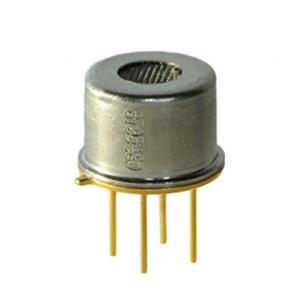
SO-A0-020 Limiting Current Type Sensor Oxygen Sensors

SO-A0-020 Limiting Current Type Sensor Oxygen Sensors

Measuring gas: Oxygen concentration
Measuring medium: Gaseous atmosphere
Measuring principle: Limiting current type sensor
Measuring ranges: 0.01 – 2.0 vol.% O2

Product Specification

SO-A0-020
Limiting Current Type Sensor Oxygen Sensors
When voltage is applied to a zirconia electrolyte cell, oxygen is pumped through the zirconia disc from the cathode side to the anode side because the carriers of the current flowing through the zirconia electrolyte are oxygen ions. By attaching a cap with a pinhole on the cathode side of the cell and by increasing the voltage over the cell the current shows saturation due to the rate limiting step in the transfer of oxygen to the cathode. This saturation current is called limiting current and is nearly proportional to the ambient oxygen concentration.
Below the advantages of the oxygen sensor:
measuring range 0.01 to 2.0 vol.% oxygen
High accuracy
For many types a more or less linear characteristic
Small temperature dependence of the sensor signal
Low interference with other gases
Long service life
In many cases “Single point calibration“ necessary only once
Applications:
Medical
Laboratory
Food industry
Household/Gastronomy
Measuring technique
Security technology/Monitoring
(Electrical-) industry
Characteristic Data:
Measuring gas: Oxygen concentration
Measuring medium: Gaseous atmosphere
Measuring principle: Limiting current type sensor
Measuring ranges: 0.01 – 2.0 vol.% O2
Response time (t90): 2 to 25 sec. (Depends on: sensor type, gas flow, measuring chamber)
Sensor voltage / heating voltage / power consumption / heater cold resistance
Sensor voltage: 0.7 to 1.6 Volt
Heating voltage: 3.6 – 4.4 Volts
Power consumption: 1.3 to 1.8 Watts (depends on application and packaging)
Cold resistance:  R( 25°C ) = 3.25Ω ± 0.20Ω
Warm up time: Min. 30 s
Maximum permissible operating temperature: 350°C (*)
*Depending on the cable and filter assembly (see paragraph: specification, Cable assembly)
Permissible volumetric flow rate (Purging the sensor)
For all sensor types, the maximum flow rate depends on the way of purging the sensor (sensor in direct gas flow, gas beam shape, etc.) and the size of the measuring chamber. Exception: SO-E1-xxx (TO8 + hose connection for direct gassing). Permissible flow
[ml/min]: 100 - 500 (optimal: 250)
Lifetime (MTTF): ~ 20.000 hours (*)
*Depending on measuring medium. Stated lifetime refers to a heated, operated sensor of type SO-xx-250 and SO-xx-960. A failure or reaching the lifetime typically means a slight deviation from the dispatch specifications.
Vibration resistance
Sensors based on the TO8 socket as well as those built with a TO39 socket (SO-Bx-xxx, SO-Ex-xxx, SO-Ax-xxx) meet the European Norm EN60068-2-6 (Sinusoidal vibration tests).

2016年7月27日星期三

Bosch oxygen sensor marks 40 years on market

Robert Bosch LLC is celebrating the 40th anniversary of its invention of the automotive oxygen sensor and is marking the production of its one billionth oxygen sensor.
An integral part of today’s sophisticated vehicles, automotive oxygen sensors are now a standard feature on all gasoline and most diesel engines worldwide. No other vehicle component stands for “clean driving” as much as the automotive oxygen sensor does, keeping the fuel system running efficiently to protect the environment from harmful emissions while helping to save fuel cost, according to Bosch.
“Since pioneering this technology four decades ago, Bosch has continued to lead the way in automotive oxygen sensor design and innovation,” says Eric Yagley, senior product manager oxygen sensors for Robert Bosch LLC, Automotive Aftermarket North America. “Today’s Bosch Wideband oxygen sensor has a more sophisticated sensing element that provides a signal to the vehicle’s ECU that is proportional to the amount of oxygen in the exhaust.”
The automotive oxygen sensor was developed by Bosch as emissions systems were beginning to be established in the 1970s. At that time, a growing need to meet new stringent emission standards resulted in countless rounds of testing and development, and ultimately the first automotive oxygen sensor, the Bosch Lambda Sensor, was created.
As an early adopter of the technology, Volvo was the first manufacturer to equip its vehicles with automotive oxygen sensors, starting with the 1976 Volvo Lambda Sonde. In the years since, automotive oxygen sensors have become an essential part of the modern emissions system which monitors and regulates the combustion process, with many applications utilizing multiple oxygen sensors in the vehicle exhaust system.
The company says one of the best testaments to the quality of Bosch oxygen sensors came in 2012. The NASCAR Sprint Cup Series made the switch from carbureted to fuel-injected engines, and Bosch became the exclusive oxygen sensor of NASCAR. In 2016, Bosch extended its partnership with NASCAR to include fuel pumps and injectors as well.
Bosch offers a full coverage program of aftermarket automotive oxygen sensors, produced on the same manufacturing lines as Bosch OE sensors. These aftermarket sensors feature OE form, fit and function to meet or exceed manufacturer specifications. Bosch Oxygen Sensors are jointly engineered and manufactured in the United States and Germany.

ISweek(http://www.isweek.com/)- Industry sourcing & Wholesale industrial products

2016年7月25日星期一

The Oxygen Sensor and How it Works

An oxygen sensor is also known as an (O2 Sensor) which is a vital component of any vehicle’s emission system.

Some old vehicles have fuel injection systems, while all new vehicles have them, in which a computer will regulate the amount of fuel that is delivered to the engine. The computer will communicate with the sensors throughout the system to determine how much fuel to deliver to the engine and of course, how frequently.

The oxygen sensor is found in the exhaust manifold.
One end of the oxygen sensor will detect the oxygen levels in the exhaust flow. The other end will connect to the wiring that gives all the information to the computer.

The computer will then use the sensor readings to make sure that the engine is getting the right amount of fuel. If there is too much or too little fuel, the readings from the oxygen sensor will change, and this will then make the computer readjust the amount of fuel that is being delivered to the engine.

An oxygen sensor will fail from time to time. Whenever the sensor malfunctions, all the important feedback about the engine performance will then be lost. This will then cause the computer that runs the electronic fuel injection system to have absolutely no idea of how much fuel to deliver to the engine.

An O2 sensor always has a mileage rating. This indicates to us how long the sensor is expected to last. There are a few different ways of finding this information.

A vehicle owner’s manual or a shop manual should state what the lifespan of the oxygen sensor is expected to be. If none of these books are available then the dealership will be able to look up the information for a specific vehicle. Also auto parts stores will have the information. In general the oxygen sensor should last approximately 30,000 miles in older vehicles and 60,000 miles in newer vehicles if not more, but be sure to check your cars manual or techincal service bulletin for the right time to change it.

When you find out the mileage rating for the O2 sensor in your vehicle, it is always a good idea to keep all records of when any mechanical work is done on the vehicle. Therefore if you know at least when the sensor was replaced in the first place you will know when it needs to be replaced again.

If you replace the oxygen sensor regularly it will help:
- Maintain your gas mileage.
- Help prevent other related car troubles.
- Helps prevent failed emission tests due to malfunctioning oxygen sensors
- Help prevent poorly running engines with rich gasoline mixes.


2016年6月14日星期二

Global Automobile Oxygen Sensor Industry Market Research 2016 to 2021

In this report, we analyze the Automobile Oxygen Sensor industry from two aspects. One part is about its production and the other part is about its consumption. In terms of its production, we analyze the production, revenue, gross margin of its main manufacturers and the unit price that they offer in different regions from 2011 to 2016. In terms of its consumption, we analyze the consumption volume, consumption value, sale price, import and export in different regions from 2011 to 2016. We also make a prediction of its production and consumption in coming 2016-2021.
At the same time, we classify different Automobile Oxygen Sensor based on their definitions. Upstream raw materials, equipment and downstream consumers analysis is also carried out. What’s more, the Automobile Oxygen Sensor industry development trends and marketing channels are analyzed.
Finally, the feasibility of new investment projects is assessed, and overall research conclusions are offered.
Data source: customs database, industry association, expert interview and network information, etc.
4 Major Manufacturers Analysis of Automobile Oxygen Sensor
    4.1 Company 1
      4.1.1 Company Profile
      4.1.2 Product Picture and Specifications
      4.1.3 Capacity, Production, Price, Cost, Gross and Revenue
      4.1.4 Contact Information
    4.2 Company 2
      4.2.1 Company Profile
      4.2.2 Product Picture and Specifications
      4.2.3 Capacity, Production, Price, Cost, Gross and Revenue
      4.2.4 Contact Information
    4.3 Company 3
      4.3.1 Company Profile
      4.3.2 Product Picture and Specifications
      4.3.3 Capacity, Production, Price, Cost, Gross and Revenue
      4.3.4 Contact Information
    4.4 Company 4
      4.4.1 Company Profile
      4.4.2 Product Picture and Specifications
      4.4.3 Capacity, Production, Price, Cost, Gross and Revenue
      4.4.4 Contact Information
    4.5 Company 5
      4.5.1 Company Profile
      4.5.2 Product Picture and Specifications
      4.5.3 Capacity, Production, Price, Cost, Gross and Revenue
      4.5.4 Contact Information
    4.6 Company 6
      4.6.1 Company Profile
      4.6.2 Product Picture and Specifications
      4.6.3 Capacity, Production, Price, Cost, Gross and Revenue
      4.6.4 Contact Information
    4.7 Company 7
      4.7.1 Company Profile
      4.7.2 Product Picture and Specifications
      4.7.3 Capacity, Production, Price, Cost, Gross and Revenue
      4.7.4 Contact Information
    4.8 Company 8
      4.8.1 Company Profile
      4.8.2 Product Picture and Specifications
      4.8.3 Capacity, Production, Price, Cost, Gross and Revenue
      4.8.4 Contact Information
    4.9 Company 9
      4.9.1 Company Profile
      4.9.2 Product Picture and Specifications
      4.9.3 Capacity, Production, Price, Cost, Gross and Revenue
      4.9.4 Contact Information
    4.10 Company 10
      4.10.1 Company Profile
      4.10.2 Product Picture and Specifications
      4.10.3 Capacity, Production, Price, Cost, Gross and Revenue
      4.10.4 Contact Information
5 Global Production, Revenue and Price Analysis of Automobile Oxygen Sensor by Regions, Manufacturers, Types and Applications
    5.1 Global Production, Revenue of Automobile Oxygen Sensor by Regions 2011-2016
    5.2 Global Production, Revenue of Automobile Oxygen Sensor by Manufacturers 2011-2016
    5.3 Global Production, Revenue of Automobile Oxygen Sensor by Types 2011-2016
    5.4 Global Production, Revenue of Automobile Oxygen Sensor by Applications 2011-2016
    5.5 Price Analysis of Global Automobile Oxygen Sensor by Regions, Manufacturers, Types and Applications in 2011-2016
6 Global and Major Regions Capacity, Production, Revenue and Growth Rate of Automobile Oxygen Sensor 2011-2016
    6.1 Global Capacity, Production, Price, Cost, Revenue, of Automobile Oxygen Sensor 2011-2016
    6.2 China Capacity, Production, Price, Cost, Revenue, of Automobile Oxygen Sensor 2011-2016
    6.3 Europe Capacity, Production, Price, Cost, Revenue, of Automobile Oxygen Sensor 2011-2016
    6.4 Asia excepting China Capacity, Production, Price, Cost, Revenue, of Automobile Oxygen Sensor 2011-2016
    6.5 North America Capacity, Production, Price, Cost, Revenue, of Automobile Oxygen Sensor 2011-2016
7 Consumption Volume, Consumption Value, Import, Export and Sale Price Analysis of Automobile Oxygen Sensor by Regions
    7.1 Global Consumption Volume and Consumption Value of Automobile Oxygen Sensor by Regions 2011-2016
    7.2 Global Consumption Volume, Consumption Value and Growth Rate of Automobile Oxygen Sensor 2011-2016
    7.3 China Consumption Volume, Consumption Value, Import, Export and Growth Rate of Automobile Oxygen Sensor 2011-2016
    7.4 Europe Consumption Volume, Consumption Value, Import, Export and Growth Rate of Automobile Oxygen Sensor 2011-2016
    7.4 Asia excepting China Consumption Volume, Consumption Value, Import, Export and Growth Rate of Automobile Oxygen Sensor 2011-2016
    7.5 North America Consumption Volume, Consumption Value, Import, Export and Growth Rate of Automobile Oxygen Sensor 2011-2016
    7.6 Sale Price Analysis of Global Automobile Oxygen Sensor by Regions 2011-2016
8 Gross and Gross Margin Analysis of Automobile Oxygen Sensor
    8.1 Global Gross and Gross Margin of Automobile Oxygen Sensor by Regions 2011-2016
    8.2 Global Gross and Gross Margin of Automobile Oxygen Sensor by Manufacturers 2011-2016
    8.3 Global Gross and Gross Margin of Automobile Oxygen Sensor by Types 2011-2016
    8.4 Global Gross and Gross Margin of Automobile Oxygen Sensor by Applications 2011-2016
9 Marketing Trader or Distributor Analysis of Automobile Oxygen Sensor
    9.1 Marketing Channels Status of Automobile Oxygen Sensor
    9.2 Marketing Channels Characteristic of Automobile Oxygen Sensor
    9.3 Marketing Channels Development Trend of Automobile Oxygen Sensor